Night 28 of 31 Nights of Horror
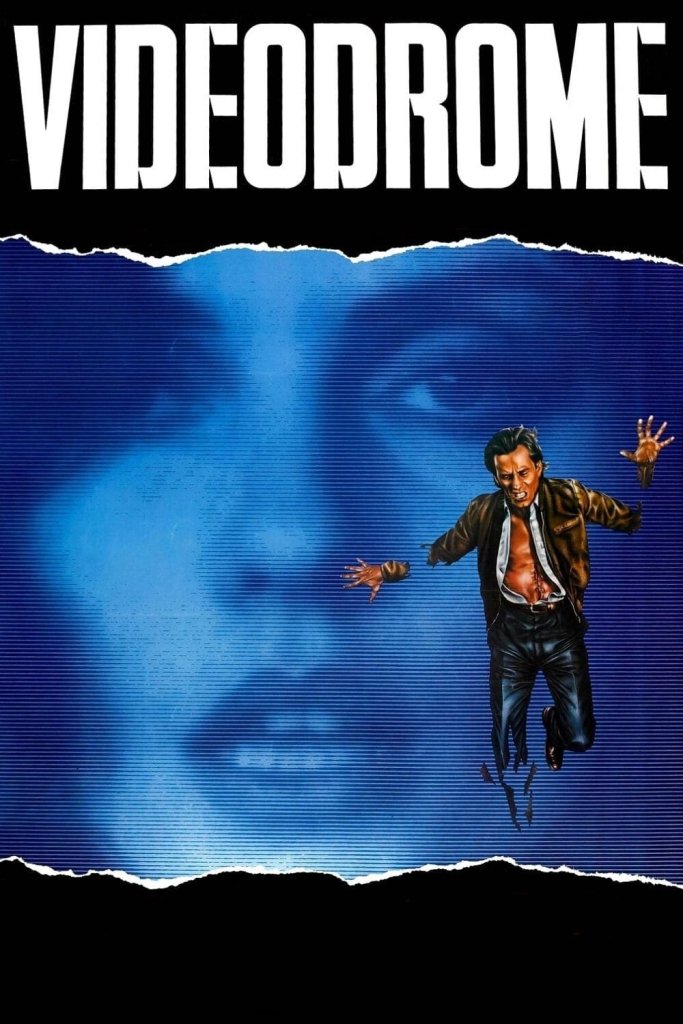
I thought I had seen this movie already, but after watching last night, I realize I must only have seen the trailer, or maybe caught snippets of it on TV, because I didn’t remember any of it and believe me, the one thing I think everyone can agree on about Videodrome is that it is memorable.
This film is unlike most of the others I’ve watched this month, in that it belongs to a category of horror I’m not a fan of. Body Horror. I don’t enjoy movies like Hostel, Saw, The Human Centipede or others of that genre, but Videodrome is different.
*SPOILERS BELOW*
The premise of Videodrome is this. Max Renn (played by James Woods) owns a small TV station in Toronto, and he’s always looking for something he can air that will push the boundaries of what’s acceptable to broadcast, in an effort to draw viewers. His technical specialist shows him snippets he was able to de-scramble of an encrypted satellite broadcast of people being tortured. He tells him it’s called Videodrome and Max starts to become obsessed with it. Then Max starts hallucinating, and the movie really takes off.
It’s not the bizarre imagery and special effects that make Videodrome interesting to me, it’s the incomprehensibility of it. I complained a lot about Possession being weird and not making sense, so it may seem contradictory that I liked those qualities of Videodrome, but the difference is that here, it all fits in the context of the story. See, the thing is, we don’t know what’s real and what isn’t. The film is shot solely around James Woods’ character. We are never given anyone else’s perspective or point of view and once we know that not everything he sees or experiences is real, how can we trust ANY of the things we see?
In literature, he would be called an unreliable narrator. He isn’t lying, it’s just that he can’t distinguish what between what is real and what isn’t, so we the viewers can no longer trust what we see. I don’t mind weird, I like weird, and even when things don’t really make sense, I okay with it, if the not making sense is an organic part of the story and characters. In those cases, it’s actually great, because it leads to discussion among the audience. Is Nicki really dead? We don’t know for sure, just because we don’t see her again doesn’t mean she is. Especially since it turns out the videos weren’t really being broadcast from Pittsburg at all… or were they? Was the conversation with Peter real? At what point did Max break from reality? Is the Videodrome signal even a real thing, or did Max suffer a psychotic break?
The movie has probably been discussed to death in film classes around the world where smarter people than me can break down it’s commentary on popular culture and our addiction to screens or something, but I just think it was a wild journey about a mans fading grip on sanity.
You can watch Videodrome on Amazon Prime if you have a subscription, I think I’m going to find a bluray copy with director’s commentary to watch it again. This is a film I’d really love to hear “making of” stories about.
 Late to the party, as usual